The film guru?

The film guru?

Monday, 29 March 2010

Kick-Ass (Matthew Vaughn, 2010)


It really does Kick Ass

Do you find the idea of a foul mouthed 11 year old girl getting kicked in the face by a fully grown man entertaining? Neither do the makers of Kick-Ass, although that’s what the press would have you believe. A recent Daily Mail article cited scholars, psychologists and lawyers to warn the public of the dangers of a film who’s comic book source materials tag line is ‘Sickening violence, just the way you like it’. The film delivers on this promise, and is not for the easily offended or the under 15s, but for everyone else it is an absolute must see.

The self appointed superhero title that the films protagonist Dave Lizewski gives himself is the first hint towards the films tonality. Dave is an average 17 year old American geek who spends his day avoiding girls, talking with his equally geeky friends and fantasising. His two main fantasies involve sexual rendezvous with the fairer sex, and being a superhero. After ordering a scuba suit of the internet, he attempts to fulfil his desires.

Unlike his fantasy counterparts, Kick-Ass has no special powers, just a lot of courage and naivety. When his first attempt at stopping crime results in getting stabbed, he awakes to find himself unable to feel much pain due to damaged nerve endings. That ability is as good as it gets for him, but it does let him take a beating. It is during his first mass beating that he begins to gain recognition. Parodying society’s obsession with celebrity culture and YouTube he becomes an internet sensation. This attracts the attention of some real life superheroes, and some all too real bad guys.

Hit-Girl and Big-Daddy are the real superheros and the film is impressively amoral in its approach towards them. Big-Daddy is hell-bent to get revenge on the organised crime syndicate, ran by Frank D’Amico, that resulted in a long jail sentence and the death of his wife. To help him, he effectively brainwashes his daughter into a lethal weapon, 11 year old Mindy Macready becomes potty-mouthed assassin hit-girl.

This is where the crux of the controversy has come from, and unsurprisingly, most of the films enjoyment. Hit-Girl is the best character to grace action cinema since Uma Thurman killed bill back in 2004. Set-piece after set-piece sees her slicing and dicing her way through D’Amico’s men and you’ll be rooting for her every step of the way.

Hardly a role model for young girls, but the film is not for children. The film makers had the balls to make an adult superhero film. Like last year’s Watchmen, it has some impressive gore, highlights include finding out what happens when you microwave someone, and crush them in a car compactor. However unlike that film, it doesn’t take itself too seriously.

Mixing action and comedy, is as dangerous as horror and comedy. It can result in both genres countering each other out generating and a film devoid of laughs and tension. Last year’s surprise hit ‘Zombieland’ in got the balance right, and Kick-Ass masters it. From teenage awkwardness, to the absurdity of the comic book genre, Jane Goldman’s script (Mrs Jonathon Ross) delivers laugh after laugh. Crucially though, it never spoofs the superhero genre; it takes its legacy and its fans seriously, whilst celebrating the ridiculous nature of the whole concept.

It is a film us Brits should be proud of, despite being set in New York it is a largely British creation. Matthew Vaughn, who previously directed the excellent ‘Layer Cake’ and the drab ‘Star Dust’, shows great skill here. Despite budget constraints he delivers breathtaking action sequences, each one brutal, hilarious and exciting whilst never repeating the same ideas. Mark Strong is excellent as the ruthless and coldblooded D’Amico and Aaron Johnston does teenage geek to superhero better than Toby Maquire’s Peter Parker. This is home-grown British cinema at its most subversive and surprising.

What elevates Kick-Ass from a fun action comedy into the best superhero offering in years is its ability to make you care about its characters. It has real heartbreak and tragedy amongst its belly laughs, Dave Lizewki is a character everyone can relate to, someone who simply wants to make a difference and feel like he matters. Despite the films outrageous ethics, including a stand-out scene where Big-Daddy shoots bullets at Hit-Girl to test out her Kevlar vest and later buys her two butterflies knifes to rip flesh with, it has good intentions. When asked by some thugs if he is crazy, Kick-Ass responds ’20 people watching on while 3 ass wholes beat the S*** out of a guy, and I’m the one that’s crazy?’

It’s not perfect, but no film is. Its soundtrack is hit and miss; the choice to have bananarama playing while hit-girl slices apart a room of drug dealers is pitch perfect but accompanying and at times the soundtrack is incredibly moving. However another action sequence is let down due to the odd selection of the chase music from 28days later, thus reminding you of this film and ruining any immersion. It could also be said that with the exception of D’Amico, the bad guys are simply Italian-America stereotypes, but this can be pretty much applied to every Superhero film set in Manhattan. None of these criticisms are enough to stop this film from gaining my first five star award.

Oh yeah...and it has Mclovin’ (Christopher Mintz-Plasse) from Superbad in it as a double crossing superhero called Red Mist. What more do you want for your money?

Verdict

It is a film that will horrify a few, and provide the rest with perfect Saturday night entertainment. Even after repeated viewings it still provides more fun, laughs and excitement than the vast majority of mainstream cinema has shown in last 10 years.

***** (5 Stars)

The Daily Mail cited can be found here....
http://www.dailymail.co.uk/tvshowbiz/article-1254384/Jonathan-Rosss-wife-Jane-Goldman-causes-outrage-film-featuring-foul-mouthed-11-year-old-assassin.html

Monday, 22 March 2010

Shutter Island (Martin Scorsese, 2009)


Enter the mind of Martin Scorsese, mind your head.

Scorsese’s first entry this decade, in a career spanning 5 of them is brimming with trauma. His strongest films have some of the most traumatised, and traumatising characters ever to Grace our screen from Taxi Driver’s Travis Bickle, Cape Fear’s Max Cady and Jesus Christ himself in The Last Temptation of Christ. His passion for older films inspired by America’s most traumatic events such as The Cold War and The Vietnam War, brimming with paranoia, violence and melodrama shines through in his latest work, Shutter Island.

A thick white fog, ominous horns dominating the soundtrack and nauseating camera angles are used to introduce the film, immediately bringing forth an atmosphere of foreboding dread. Breaking through the fog comes a ship heading towards Shutter Island, a high security asylum for the criminally insane. It carries two detectives, Teddy Daniels and his new partner Chuck Aule; their assignment is to investigate the disappearance of a prisoner who seemingly slipped out of her cell which was locked from the outside. Once they arrive, all is not what it seems, the staff seem reluctant to help and Daniels his haunted by the ghosts of his past. He quickly realises he is unable to leave the Island, and beings a quest to uncover the truth about the real goings on, leading him into a world of cold war paranoia and insanity.

To reveal much more is to spoil the fun of the film. It is one long build up to a climatic ‘grand reveal’ and its trick is intricately set up with magician like skills by Scorsese. The twist is fairly obvious within 30 minutes; if you watch the trailer close enough you’ll be able to work it out, but that didn’t stop me questioning and doubting my thoughts throughout its’ long running time.

Scorsese’s films have been compared to as works of art; he blends the mainstream and the art-house brilliantly here, whilst mixing several different genres creating an unnerving and gripping experience. DiCaprio, his current muse, is strong as usual playing a hardboiled detective with a demeanour straight out of 1950’s film noir. He is no simple Humphrey Bogart imitator though, as the plot thickens his haunted past beings to meld with his present and he becomes a vulnerable and shaken character.

His past traumas, a murdered wife and his memories of a WW2 death camp are revealed in flashbacks. Delving into his psyche is moving and captivating, beautifully shot and insightfully revealing. Scenes with his wife played by Michel Williams provide the film with tenderness and contribute towards the story arc well. The scenes dealing with the genocide of the Jews are disturbing (as anything dealing with the Holocaust should be), well filmed, but ultimately unnecessary. Teddy has enough material to traumatise him, and the audience enough plot strands to deal with.

Ben Kingsley plays the asylums lead doctor, and is a joy to watch and work out as he balances on the line of caring doctor, and evil mastermind. Teddy begins to fear that the island may be using its patients for psychotropic experimentation and Kingsley along with the other staff never appears completely trustworthy. They are no less unnerving than the patients, but the real star of the show is the sets. Rundown buildings, jagged cliff edges, crashing waves, and woods complete with grave yards create a great playground for the mystery to take place.

Adding to the psychological thriller of a plot, and the film noir characters is a heavy layer of gothic horror. Several sequences are expertly crafted and nail bitingly suspenseful. Once the Island is stuck by a hurricane, the film takes on the form of a 1930s horror, and is the most successful attempt at the gothic genre in a recent series of failed efforts (see Wolfman Review). One particular set piece sees Teddy and Aule enter ‘Ward C’ the area for the most dangerous criminals, they are warned that due to a power outage some of them are still roaming free. This line alone is enough to send audiences into a frenzy of nervous tension, and Scorsese plays on this using fantastic sound effects. Whispers, metal clanks and heavy breathing occur whilst Teddy uses matches to light the narrow corridors around him.

As homage to melodramatic films of the past, and as an exploration of trauma and paranoia Shutter Island succeeds. Its’ style may be off putting to some simply because at times it is so extravagant. Loud discordant classical music, along with consistent heavy thunder, and frequent bizarre dream sequences may seem plain silly to cynics. However this is an exploration of the mind, a disturbed one at that, and no other director could have done it so much justice.

Verdict

Overblown, overlong, yet fantastic and gripping; it’s a horror/thriller/melodrama/film noir all rolled into one, and only Scorsese could pull it off with such clarity and meticulousness. Its ending may not come as a great shock, but you’ll have a great time getting there.

****

Tuesday, 16 March 2010

Green Zone (Paul Greengrass, 2010)


Matt Damon isn’t quite Bourne again.

No matter what Green Zone director Paul Greengrass claims, his latest film which is a take on America’s war on terror, it’s an unofficial Jason Bourne hits Baghdad. The marketers know it, plastering Matt Damon’s face all over the posters with his most Bourne like expression. Matt Damon certainly knows it, shouting and running in his most Bourne like way. The script writers certainly know it, weaving a plot combing action set pieces with a Jason Bourne like quest to find out the truth.

This is by no means a bad thing, the Bourne films make one of the best trilogies in recent times and Green Zone is at its best when it echoes the frantic intense pacing of those films. To review its best bits, is to review its ‘Bourney’ bits.

Enough of the past, the biggest flaw with Green Zone is what it does to separate itself from those films. It tries to be political. Everything about it is knowingly anti-American, which is the trendy thing all film makers appear to be adhering to at the moment. It worked in Avatar, when a few snide remarks from the film’s cornels echoed Bush’s speeches, it backfired in Brian De Palma’s Redacted which was an incoherent mess, and it doesn’t quite work in Greenzone.

The best film to tackle the war on terror so far is the Hurt Locker, which to the untrained eye could appear to be depoliticised. What it does have to say is powerful, exciting and poignant, three things that come all too rarely in Green Zone.

Basing itself in 2003, the story concerns Matt Damon’s character, simply known as Colonel Miller, and his crew looking for Weapons of Mass destruction in the city of Baghdad. Despite their ‘reliable sources’ nothing appears to turning up. The inquisitive character is approached by a local, named Freddy, who is Miller’s first lead to uncovering the truth. Needless to say Miller finds himself knee deep in conspiracy and deceit and battles against the American Government to uncover the truth.

Done delicately it could have been a conceivable plot; instead American politicians are reduced to Machiavellian baddies that would suit a James Bond film better. It is sheer Anti-American propaganda which relies on pure speculation to make its point.

Everything in the film wants to make you believe this is how it happened; the fantastic handheld camera work, minimalistic score and convincing location shooting make an intense journey. However, Green Grass’s determination to make a point about the arbitrary nature of the reason for going to war is under researched and over blown making the premise of the whole film appear ridiculous.

The writers have crammed that much conspiracy theory in there is little time for character expansion. Miller has no back story and little personality. There is very little personality to relate to. The rest of the characters are walking clichĂ©s. There is the reporter, determined to get to the truth, the ruthless politician, determined to get his way, and the cold blooded ruthless marine, determined to kill, kill, kill. The only interesting character is the Freddy who the script writers flesh out. Khalid Abdalle, previously playing a terrorist in Greengrass’s devastating United 93, has the only interesting role. Freddy, essentially Miller’s only Ally, provides the film with some much needed laughs and gives the audience someone to care about during all the fire fights.

It is these fire fights that make the film recommendable, and while this alone isn’t enough to save the film, they certainly keep you watching. Greengrass excels in putting the audience in the moment using street level angles and a handheld camera style. The final 20 minutes is a fantastically sustained set piece consisting of long shots and gun shots in which you have to remind yourself to breath.

Verdict

In short, Greengrass should have stayed more Jason Bourne, less Michael Moore. If you want a few hours of action, you could do far worse, but as far as an exploration of the War on Terror goes it is far too heavy handed.

*** (3 Stars)

Thursday, 4 March 2010

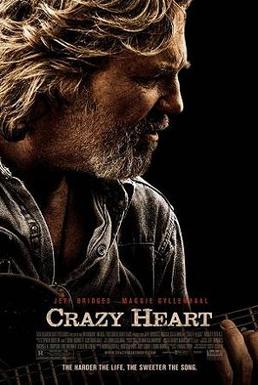
Crazy Heart (Scott Cooper, 2010)


Bridges will break your heart.

Rumour has it that Scott Cooper’s debut film Crazy Heart, based on a Novel by Thomas Cobb struggled to find a distributer and was destined to premier on American Television. As soon as various studio executives saw Bridges performance a bidding war commenced, and now this film has been met with critical success in the USA and a number of nods at the Oscars this year.

Jeff Bridges, who has received an academy award nomination for his performance, is the saviour of this film in more ways than one. Completely embodying his character, the washed out, alcoholic, overweight country singer ‘Bad Blake’, Bridges is the reason for this films existence. The story is nothing new and compares rather unfavourable to The Wrestler, the acclaimed film which heralded Mickey Rourke’s come back last year. The pacing is gentle, the direction is understated, and the plot is simple. Taken as a whole however, this is one of my favourite films of the year, simply as the powerful study of a talented, ageing man who gets a second shot at life.

The film begins with Bad Blake playing at a bowling alley in southern USA. He is clearly an alcoholic, reliant on whiskey and cigarettes to get him through the day. While he has a small yet loyal fan base and some remaining talent on stage, he is clinging on to his former, more successful days. His redemption comes when being interviewed by single mother Jean Craddock. Instead of seeing her as yet another woman to bed, he connects to her on a deeper level. He becomes involved in her life, but his dependence on alcohol risks sabotaging their relationship.

I have been careful here not to ruin any more, as while the plot really isn’t the most essential part of the movie there is great pleasure to be taken in discovering Blake’s background. Blake is part ‘the dude’ from ‘The Big Lebowsky’ and part Ben Sanderson, the alcoholic played by Nicholas Cage in ‘Leaving Las Vegas’. He is charming, laid back and talented but underneath all this he is a fragile mess. Blake is such a fascinating character to watch that the simple plot only adds to films emotional impact. There are no real standout scenes that showcase Bridges fantastic performance, it is naturalistic and heartfelt. In fact, there is only one real crisis in the movie, which again I will not ruin, but it is something that in many other louder brasher films would be overplayed, but in this it is just quietly terrifying.

His alcohol dependence is initially quite humorous and fitting with his musician life style, but steadily it becomes repulsive and the detrimental impact it has had on his life becomes clear. He begins to realise that he has no one to connect with, and struggles to hold onto anything in life other than a bottle of whiskey. As emphatic as the film is towards him, it doesn’t hide the realities of substance abuse. What is does do is skim over his time in a rehabilitation clinic. Blake steps into rehab, and in the passing of one minute in our time, one month in film time he is sober. It’s a shame that director and writer Scott Cooper wasn’t happy breaking the films gentle tone and pacing to deal with his rehab. For such a convincing performance, his recover from alcoholism appeared far too easy.

Supporting Bridges is Maggie Gyllenhaal; her performance as Jean, Blake’s love interest, earns her a well deserved nomination at the Oscars. Despite their age difference, Jean and Blake make a very convincing couple, the films gentle pacing allows them time to converse and develop this into a relationship; a nice change from the current trend of showing a scene of intimacy followed by the token sex scene. Colin Farrell also makes a memorable cameo playing Tommy Sweet, a younger more successful version of Blake.

What there are in the way of set pieces come in the way of musical performances, and much of your enjoyment of this film may depend on your opinions on country and western music. I am a fan and this film has some cracking songs. It turns out not only can Bridges act, he can also sing rather well. Accompanying the music are spectacularly filmed shots of Southern America. The desert casts a constant warm glow over the film and wide panoramic views are a constant reminder of the freedom and loneliness life on the road offers.

Verdict
Crazy Heart is Bridges film, and after a career of memorable performances this should be the film to get him that much deserved Oscar. It elevates an average film into a great one and despite having seen it all before, you’ll happily watch it all again and again.

**** (4 Stars)

Tuesday, 2 March 2010

The Blind Side (John Lee Hancock, 2009)


You'll see this one coming

If you were to get a film making machine and chuck in all the ingredients for certain commercial success in America, you’d come out with The Blind Side. The films sure-fire recipe contains a hefty chunk of an immensely popular sport, a generous dose of a popular and talented movie star, an undercurrent of a zero-to hero success narrative and the chance to tag on “based on a true story” on your menu. You will have tasted it all before.

The, admittedly, admirable story, concerns a wealthy family who due to a chance encounter ended up taking in a homeless African-American into their rather large house. Head of the family is head-strong mother Leigh Tuohy and along with her tolerant easy going husband and role model children they help Michael Oher, or ‘Big Mike’ as he is nick named, unleash his true potential. ‘Big Mike,’ the son of a crack-addict has little in the way of education. Quickly however his new school discovers he rates in the ‘98th percentile for protective instincts’ (however they measure that) and due to this makes a fantastic American football player.

This film has received quite a lot of attention due to the much heralded performance of Leigh by Sandra Bullock. The Blind Side is up for both best picture and Bullock up for best actress at the Oscars this year. Bullock is always a guarantee for commercial success, but in terms of quality her films are very much hit and miss. All the promise that she shows in films like Crash, Miss Congeniality (a guilty pleasure of mine) and Speed she throws away in awful films like the Hope Floats, The Proposal and...Speed 2.

Is it best picture worthy? Most certainly not. Is Bullock deserved of winning best actress? While it is perfectly convincing and at times emotional performance, it is largely one dimensional. She is a dominant, powerful and as the film frequently stresses, a Christian woman. Director John Lee Hancock is that desperate to show what an amazing woman she is that little else is given much attention. The film gets the balance wrong, drawing the whole focus of the film towards her and little towards Michael.

For someone with such a tough background the real Michael Oher, now a successful American Football star, must have incredible determination and resilience. The film doesn’t make much attempt to show this, and instead gives Leigh all the credit. Underneath the good sentiment and exciting sports drama is a rather ugly tonality which presents Michael as a dog that needs training and Leigh as his trainer. Michael remains largely passive throughout the film; his only strength seems to come in how well he can throw around his weight on the football field. We are invited to feel sorry for Michael, as you might a wounded animal, but never to admire him, which is what he really deserves. He is shown as a gentle and simple giant. Leigh frequently and apparently affectionately refers to him as a bull from a children’s story. The vast majority of praise and respect the film dishes out goes to the rich white characters that appear to get all credit for their hard work in nurturing him.

If this review seems unfairly weighted towards analysing a potential racist
undercurrent within the film, it’s probably because I found little else to focus on. The Blind Side is a perfectly acceptable drama, with adequate direction, a decent soundtrack and strong performances. The football games and practices are shot with some flair and a good sense of the middle class life is shown through excellent set design.

Contrasting this, when the film shows us Michael’s ‘hood’ there is a degree of menace amongst the rundown streets, but nothing compared to the harsh realities recently seen in Precious. Everything from Michael’s previous life is washed over quickly. At one point he returns to his old neighbourhood and has an encounter with some drug dealers from his past, but compared to other filmic representations of them, the way they are shown feels sugar coated. That being said there are a few laughs, a few tears, and if you’re less cynical than me, you may find the story truly inspirational.

Verdict
It is definitely a film aimed towards American audiences, and I don’t know if it will find the same success here with its relentless optimises and emphasis on wholesome Christian values. The film begins with by analysing an accident that occurred during an American Football game and ends with Leigh thanking god for all that she has. In reality shouldn’t she be thanking herself? That’s pretty much all the film does.
**1/2

Sunday, 28 February 2010

A Single Man (Tom Ford, 2010)


Join this single man for a few hours, it’s worth it.

Tom Ford may have ventured from his established career in fashion to produce, write and direct this film based on the novel by Christopher Isherwood, but it is that stylish it deserves its own cat walk.

Colin Firth stars as the single man that the title concerns, playing English literature professor George, who in the wake of his lovers tragic death plans to kill himself at the end of a hazy summers day in 1960s LA. May sound like depressing stuff, but unlike other recent films such as Precious which approach their bleak topics with heavy handed seriousness, A Single Man is playful, moving without being overbearing and most importantly enjoyable.

Firth certainly earned his Bafta winning performance, appearing in every scene in the film. His performance is powerful, understated and convincingly embraces the sexuality of the character. He is well known for playing characters full of British charm and dry wit, and that is certainly on display here, but with a strong undercurrent of vulnerability which makes the film so affecting. Accompanying him in what may be his last day on earth is Julian Moore playing a British divorcé, who as usual is brilliant, and Nicholas Hoult, who is better known as the kid in Hugh Grant picture About a Boy.

As strong as the performances are the real star here is the director. Ford has an assured and original style that takes a simple story and turns it into a sensory experience. George’s voice over explains his ever changing emotional state, and accompanying this is the films ever changing colour style that suits his mood. For a large part of the film, there is a washed out grainy colour scheme which visually captures his despair. The excellent atmospheric score accompanies the almost greyscale cinematography. An early scene flashes back to the moment George hears about the death of his partner, a combination of fantastic acting, moving music and assured direction makes it an overwhelming scene.

It is not all doom and gloom however, and it appears George has the ability to see beauty in many things, largely the landscape and the bodies of others. To show this Ford uses extreme close ups and slow motion consistently, which is disorientating and seducing. It becomes clear we are seeing the world through the eyes of George; strengthen our emotional connection with him. The grainy tone turns to brilliant Technicolor in the moments where George feels happiness, largely though his developing friendship with student Kenny, who he appears to take more than a professional interest in.

For some the film may drag, it is simply a day in the life of a man struggling to get over a loss. We see him at work, going about his daily errands, get drunk with an old friend and ritually prepare him for suicide. A darkly comic sequence shows him working out the most comfortable position to blow his brains out. It is this effortless blend of playfulness and seriousness that results in one of the year’s best films.

Verdict
Even for those with short attention spans it is impossible to resist the films style, and not empathise with George. Ford has created a truly cinematic experience; everything that takes a good film to a great film pays off here. Direction, acting, music and story all serve to create a great sense of time and place, one that is an essential for any cinema fan to visit.
8.5/10

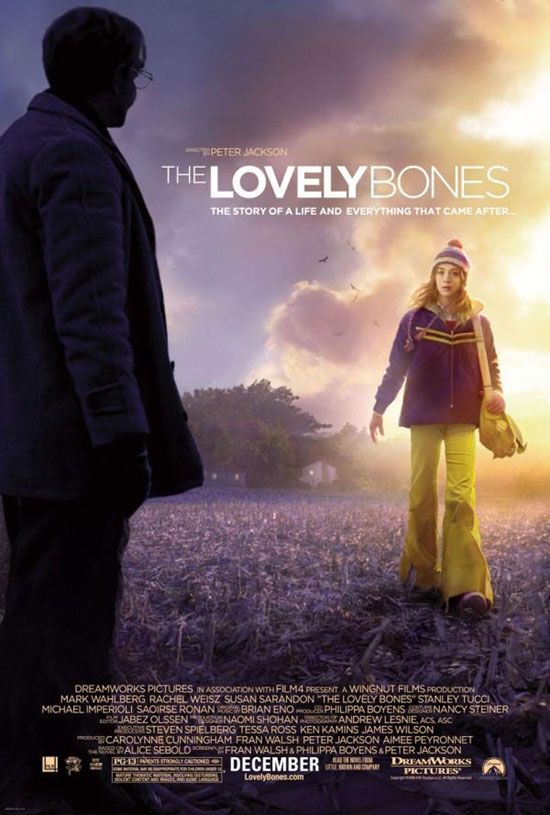
The Lovely Bones (Peter Jackson, 2010)


A whole lot of not so lovely CGI

Peter Jackson knows how to pick his source material. Maturing from fantastically gory zombie films to the most epic trilogy of my generation he is never one to back away from a challenge. His latest venture, an adaptation of Alice Sebold’s phenomenally popular novel The Lovely Bones was hardly going to make life easier for himself. He chose to follow up his overlong but effective King Kong, with a story involving the rape and murder of a 14 year old girl, the afterlife, the emotional breakdown of a family and a homicide investigation that stretches on for half a decade. What he has created is an ambitious, yet messy film.

For those of you who have not seen the trailer, the films catalyst is the brutal murder of teenager Susie Salmon at the hands of her neighbour George Harvey. After her death, she resides in the ‘in-between’ a purgatory like domain in which she watches how her death impacts her family.

The 12A certificate surprised a lot of people considering what the film deals with; a teen friendly film involving child murder? Interestingly the most effective moments are the darker ones, and despite the low age certificate there are some genuinely frightening and disturbing moments throughout. Without resorting to graphic acts of violence, Jackson creates a foreboding atmosphere leading up to the inevitable murder of our protagonist. As we watch Susie go about her life, building ships in bottles with her father, developing her photography hobby, and shying away from her crush on boy at her school, her narration from the after-life is a constant reminder that this will soon change.

Initially the characters are fleshed out and generally well acted, and up until her departure into the ‘in-between’ I was fully absorbed. The crux of the film, Susie’s murder is an unbearably tense sequence when she is fooled into a trap set up by neighbour/serial killer George. Stanley Tucci has received an Oscar nomination for his portrayal of the character and it was well deserved. George Harvey creates the same menace that has been rarely seen since Anthony Hopkins steeped into the shoes of Hannibal ‘the cannibal’ Lecture. His subtle change from friendly neighbour to something far more sinister is an awesome and brave display of acting. His terrifying staring and heavy breathing create more unease that I have felt in the cinema in some time. Due to its relevance to recent related news stories, the death of Susie Salmon is nothing less than devastating cinema.

It is after her untimely demise that the film takes a u-turn and loses its way. The after-life is never an easy thing to depict, every individual on this earth has their own vision of it, and Jackson’s does not work. The after-life is seldom successfully created on screen; the last ambitious and failed attempt was in ‘What Dreams May Come’ starring Robin Williams. Like that film, this depiction is far to CGI heavy. I am never a supporter of reviewing a film through comparison to the novel it is based on; they are too different mediums and therefore warrant different approaches. However, the beauty of Sebold’s novel was her imaginative vision of the after-life. Susie’s paradise is personalised to her, it is shaped by her personality. The vision of ‘the in-between’ here is a cross between an acid hallucination and a Bjork song. Giant mountainous vistas give way to sparkling rivers. Huge beach balls roll across waves. Vast corn fields morph into swamps. It’s all very stylish, but has no substance. The great human unknown, the after-life, is reduced to a CGI showcase. At one point Susie utters ‘it’s beautiful’ as she gazes across her computer generated environment. I had to disagree.

The most cringe worthy moments involves Susie running through ever changing locations while an awful song wails on. It is like an expensive, soulless music video.

Jackson also seems unsure how to blend the after-life with reality. Susie looks into various portals that allow her to see the events on earth. Various parallels are drawn as her ‘in-between’ is shaped by the events on earth. It’s an interesting concept, not only the living letting go of the dead but the dead letting go of the living, but it is never explored deeply enough. I found myself getting impatient with the scenes involving Susie and itching to get back to earth. Due to the reliance on CGI and dreamy, unfocused direction, the connection between earth and the afterlife negatively affect the story. Cross-cutting between the two locations becomes confusing, tacky and tedious.

Despite these sequences, the film is at its best grounded in reality, and when it works, it is an excellent psychological thriller. Jackson uses murderer George Harvey sparingly making him a mysterious and frightening presence. Moments of real terror are effectively staged, including a nail biting homage to Hitchcock’s Rear Window. Whilst not skimping on the horror aspects of the story, the film does tone town the emotional turmoil of the family. The events understandably tear relationships apart but these moments lack any real emotional pull. One of the Novel’s most interesting characters, Susie’s alcoholic grandmother is, disturbingly enough, reduced to comic relief. His father’s fixation with solving the case is effectively shown, but his wife, played excellently by Rachel Weiss is hardly present. She moves away from home to order to escape domestic traumas but this is skimmed over very quickly.

All is not lost though. One family member who is used well is Susie’s little Sister Lindsey. Susie watches her grow up and enjoy experiences that she will never have, such as a first kiss, and this leads to some heartbreaking moments as she watches on, realising life experience has been taken from her. This connection between life and the after-life is affecting, but on the whole, it is never clear if/how Susie is connecting with her loved ones on earth; the two locations are linked tenuously.

Verdict
The Lovely Bones is a film of two half’s. An effective, emotional and terrifying thriller is tainted by an effects heavy, soulless exploration of the afterlife. Ultimately it is Peter Jackson’s unrelenting ambition that is the films downfall. In trying to cram so much into the films running time, he ends up overusing visual effects, and under using attempts at emotional involvement. If there is a movie after life, half of this film is going to heaven, and half can burn in hell.
6.5/10

A note on ratings – I am generally adverse to reducing move reviews to quantifiable ratings such as the star system seen in Empire and the numerical system used on IMDB.com....However, as I’ll soon be taking this blog to local newspapers I will do doing it from now on as it offers a quick guide to my verdict on the film. However, the review is where the information is. How can a 8/10 horror film be compared to an 8/10 political thriller or art house film. Number ratings are flawed, and each film needs to be taken on its own merit. An effectively exploitation picture and an Oscar contender cannot be compared in terms of traditional film quality, but still may score 9/10 each if they are strong in their own fields. Anyway, I’ll give this rating thing a go.